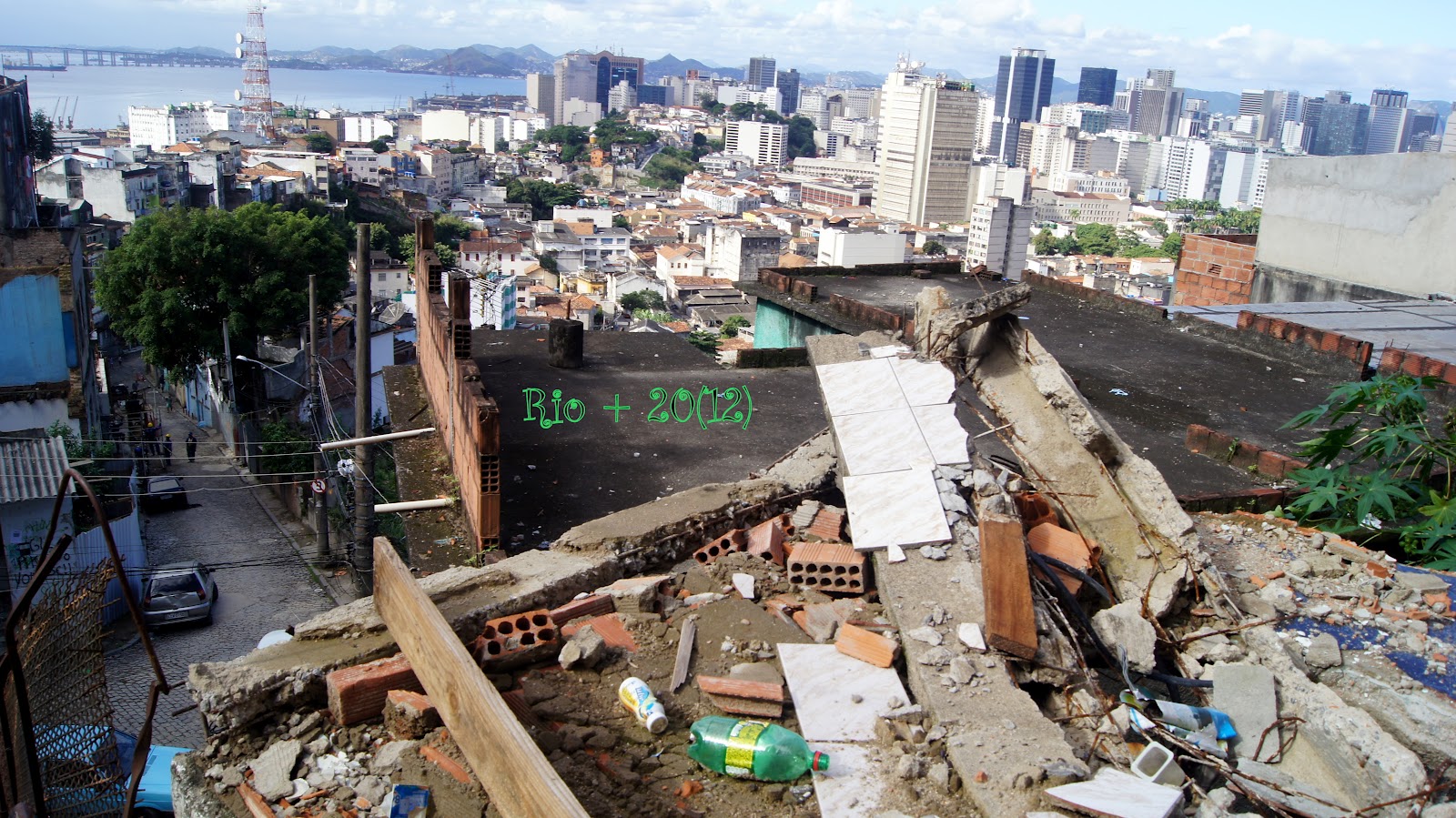
31 July 2012

Non-Olympic Post

The tables below are related peices of information. The first indicates that Brazilian teams do not make much money from putting butts in seats. If, for example, a team's attendance figures dropped in half for a season, this would only mean a 5.5% loss in revenue for the year. This could be easily compensated for by selling a couple of players or penning a new sponsorship contract. This is bad news for fans, as the second table shows. 


 Brazilian club revenue streams - 2010

Source of income
(%)
Ticket sales
11
Sponsors and advertising
12
Other receipts (i.e. replica sales)
12
Member dues and amateur sports
13
Television
24
Sale / transfer of players
28
Source: Cadernos FGV Projetos, Junho 2010, Ano 5, numero 13, issn 1984-4883

This table shows the rapid decrease in attendances and the staggering rise in average ticket prices over the last five years, the only for which data are available. The perverse influence of television on Brazilian football means that most teams play games on Wednesday nights at 9:50, after the tele-novelas. There is no special transportation scheme, public transportation stops at midnight and all fans are treated like criminals, as if they are waiting for the right moment to offer their fellow fans a Molotov cocktail. This seemlingly deliberate elimiation of fans has been more than compensated for by an increase in profits. The math is simple, charge way more for fewer people, price out your "undesireables" and allow the clubs to pay off the torcidas organizadas to provide the "show" which the television networks will strategically shoot to make it appear as if the stadium is full. This is a years' long process of seperating the people from the people's game. Does anyone think this will improve with the World Cup?

 Average attendance at football matches – Campeonato Brasileiro, Serie A, 2007-2011

year
total paying public
average paying public
gate receipts(R$)
average ticket (R$)
2007
6.582.976
17461
80040848
12.2
2008
6.439.854
16992
101241490
15.7
2009
6.766.471
17807
125764391
18.6
2010
5.638.806
14839
112873893
20.0
2011
5.660.987
14976
117665714
20.8
% Change
-14
-14
+46
+71
Fonte: http://www.cbf.com.br/competicoes/campeonato-brasileiro/

26 July 2012

Velodromo Rio

The continual refrain from the organizers of mega-events in Brazil is that the hosting of the 2007 Pan American Games gave the city's event boosters credibility in the eyes of international sports federations. These very same organizers admit that there was "no substantial legacy" from the Pan, other than going 10x over budget, militarizing the city, and gaining experience in running a major event. To their credit, apparently the Pan was well organized as an event unto itself (ticketing and sports competitions), but the innumerable projects that have been left over to rot in the tropical sun defy full description. 


Among the innumerable absurdities is the Velodromo (cycling track). Built for R$14 million, there is continual talk of destroying the existing structure and building a new one. This is what the president of the Municipal Olympic Authority had to say: 


“Laudos oficiais mostram que a pista atual não permite a quebra de recordes. E ainda há duas pilastras atrapalhando a visão geral. A capacidade é bem menor do que a exigida (1.500 contra cinco mil lugares). O edital de licitação abre duas possibilidades: tanto para a reforma abrangente quanto para a construção de um novo velódromo. O governo federal estuda também remontar o velódromo atual em outra cidade.”

"The official reports say that the track won't permit records to be broken and there are still two support posts that are blocking the general view.The capacity is smaller than required (1500 vs 5000). The (new) licencing process will open two possibilities: one is to reform the current stadium and the other is to build a new velodromo. The federal government is studying the possibility of moving the velodromo to another city."


If we project that a new Velodromo will cost at least double the 2007 version, we can figure an investment around (and conservatively) $28 million for a sport that is not practiced with much frequency in Brazil. However, people do (or would) use their bikes to get to work, so let's look at the budgeting for bike lanes. 


There is a project called Rio: capital of bikes, which this site suggests has a budget of nearly R$67 million. However, in looking at the ACTUAL money spent by the city government on this project in 2011 and 2012, we find the following: 


2011: R$1,542,890.49
2012: R$1,542,890.49


Ok, great. The city government has invested more than R$3 million on this project, but what does the project entail? 


One company, Sinape Sinalizacao Viaria Limitada, received  R$ 644,228.83 in 2012. What do they do? Signage. Thus, 41% of the bike project budget is dedicated to signage. I haven't seen a new sign on a bike path in years. How many signs can one put up on 150 km of bike path anyway? Something fishy here... 


The point is this: we are spending tens of millions again and again on monumental projects that have no use, are poorly projected, and will fill the pants of the public debt for years to come. In the meantime, the bombast about potentially useful public works projects, like Rio - Captial de bicicleta, has no basis in reality once we start looking at how much money is spent and where. Rio de Janeiro has some bike paths, but they are really inadequate, poorly connected, and when you leave them to try to get from one to another, you run the risk of death. The recently implanted Transoeste BRT line is being used as a bike path, causing some obvious problems between high speed buses and bike commuters. Why are people using the BRT lanes? Because there is no bike path. Why is there no bike path? Because there is no planning and no creative intelligence at work to ends that don't have to do with selling the city to the highest bidder. 


The Velodromo farce is but one element in a larger joke that is taking on cosmic dimensions. But perhaps we won't make the mistake of hoisting the South Korean flag when the North Koreans take the field, as happened on the opening day of the women's football tournament. Nice one LOCOG. 

24 July 2012

Maracazinho


PosiçãoDataPúblicoJogoCompetiçãoEstádio
116/07/1950199.854Brasil 1-2 UruguaiCopa do MundoMaracanã
221/03/1954195.513Brasil 4-1 ParaguaiEliminatóriasMaracanã
315/12/1963194.603Fluminense 0-0 FlamengoCampeonato CariocaMaracanã
431/08/1969183.341Brasil 1-0 ParaguaiEliminatóriasMaracanã
504/04/1976174.770Flamengo 3-1 VascoTaça GuanabaraMaracanã
615/06/1969171.599Flamengo 2-3 Fluminense(*)Campeonato CariocaMaracanã
715/06/1969171.599Botafogo 0-0 Portuguesa-RJ(*)Campeonato CariocaMaracanã
822/12/1974165.358Flamengo 0-0 VascoCampeonato CariocaMaracanã
909/03/1977162.764Brasil 6-0 ColômbiaEliminatóriasMaracanã
1006/12/1981161.989Flamengo 2-1 VascoCampeonato CariocaMaracanã
data from here...(hoping they've done their homework well)

Capacity of Maracazinho in 2014: 76,000


In case you were wondering where the next 10 biggest crowds in Brazilian football history occured: 


1119/08/1973160.342Flamengo 0-0 Vasco(*)Campeonato CariocaMaracanã
1219/08/1973160.342Bangu 2-1 Madureira(*)Campeonato CariocaMaracanã
1329/04/1979158.477Flamengo 2-2 BotafogoCampeonato CariocaMaracanã
1429/05/1983155.523Flamengo 3-0 SantosCampeonato BrasileiroMaracanã
1516/05/1976155.116Fluminense 0-0 FlamengoCampeonato CariocaMaracanã
1601/05/1968155.098Flamengo 2-1 Vasco(*)Campeonato CariocaMaracanã
1701/05/1968155.098Bonsucesso 1-0 Olaria(*)Campeonato CariocaMaracanã
1801/06/1980154.355Flamengo 3-2 Atlético-MGCampeonato BrasileiroMaracanã
1916/12/1984153.520Flamengo 0-1 FluminenseCampeonato CariocaMaracanã
2013/07/1950152.772Brasil 6-1 EspanhaCopa do MundoMaracanã


or the next: 

2129/09/1977152.059Flamengo 0-0 VascoCampeonato CariocaMaracanã
2221/03/1982150.289Brasil 1-0 AlemanhaAmistosoMaracanã
2301/06/1969149.191Botafogo 1-2 FlamengoCampeonato CariocaMaracanã
2428/04/1968149.005Botafogo 0-2 Vasco(*)Campeonato CariocaMaracanã
2528/04/1968149.005Madureira 1-0 Portuguesa-RJ(*)Campeonato CariocaMaracanã
2615/12/1962146.287Botafogo 3-0 FlamengoCampeonato CariocaMaracanã
2709/10/1977146.082Corinthians 1-2 Ponte PretaCampeonato PaulistaMorumbi
2805/12/1976146.043Fluminense 1-1 CorinthiansCampeonato BrasileiroMaracanã
2901/05/1978145.200Brasil 3-0 PeruAmistosoMaracanã
3018/12/1966143.978Bangu 3-0 Flamengo(*)Campeonato CariocaMaracanã

That means, of the 30 largest crowds in Brazilian history, 29 were in the Maracana. Not one of them happened after 1984. 


Here's the list of largest crowds per decade: 

20 July 2012

Guilty, as not charged (volenti non fit iniuria)


To the chagrin of fans of justice everywhere it seems as if Ricardo Teixeira and João Havelange will shuffle off this mortal coil not having served a single hour in prison. Having read through the Canton of Zug’s judicial findings, I can report that the scandal is almost too scandalous. The 15 shades of details are too juicy not to share, so in what follows I provide some quotes from the document that more or less weave the story together. If you are pressed for time, here’s the summary:

Criminal proceedings against former CBF front man Texeira, ex-FIFA boss Havelange and FIFA itself for mismanagement, embezzlement and institutionalized bribery were dropped. All of these charges were documented vis a vis bank statements and contracts dealing with the marketing rights for the World Cups in 2002 and 2006 (among other things). The good Andrew Jennings has profiled these crimes in detail. The court ruled not to continue with prosecution, but considered the defendants guilty because they made partial repayment of the bribes they had received. The logic here: if they weren’t guilty, why would they have given back some of the money? This money was taken in bribes to award World Cup broadcast rights to ISL, a now defunct marketing company. At the end of the day, these criminals took bribes, made millions and then had to pay back a fraction in order to stop further prosecution, thereby stopping the investigation through a sideways admission of guilt. Along the way, they managed to come up with some defensive gems worthy of Michelle Prudhomme.  

From the Swiss Canton of Zug:

Ricardo Terra Texeira unlawfully used assets entrusted to him for his own personal enrichment several times. These commissions, which Ricardo Terra Texeira received due to his position in FIFA, were pocketed by him (for his own use), and he failed to disclose or hand over the payments to FIFA.

Joao Havelange unlawfully used assets entrusted to him for his own enrichmentseveral times. He acted with intent to enrich himself unlawfully.

 FIFA is accused of having a deficient organization in its enterprise

Blatter escapes responsibility:
The new provisions of the statute of limitations are, in principle, only applicable, with reservations for certain exceptions, if the criminal offence was committed after they came into force.

With  this, current president Blatter gets to wiggle his way out of things. FIFA released the most ridiculous interview I can remember, where Blatter had 5 very difficult questions put to him by the FIFA press office and published the responses on the website. Follow this link for a laugh. Ignorance is profitable bliss, ‘cuz you just ran out of time, biatch!

“concerning the question of a possible unlawful enrichment under a legal limitation of time aspect are obsolete. October 1, 2003, and thus FIFA cannot be criminally liable for acts carried out prior to this date.”

This witty riposte dealt with one of the off-side traps pulled by the Texeira-Havelange legal team:
The federal court rejected the argument that the assumption that the requirement to deliver had been waived suggested that corresponding agreements were customary (FCD 132 III 466,consid. 4.3). Customs may play a role in assessing the mental elements of an offence, however not when determining whether a duty to disclose or to surrender possession exists.

The defendants had argued that they did not have to return the bribe payments because in Africa and South America, bribing is a “customary” way of doing business. Not to have accepted bribes as part of the contract would not only have been bad form, it would have unduly cheated them of their rightful income. This is a lesson that has been well learned by Brazil Worker’s Party, that has in turn instructed the rest of us that corruption generates impunity.

A related argument for keeping the money was that there was not need to return the bribes to FIFA because FIFA would have had to surrender them to the Swiss bankruptcy court that dealt with the failure of ISL marketing (which had paid the bribes). Thus, it couldn’t be argued that the president and vice-president of FIFA had harmed the organization by taking money destined for it. Genius.

The news coming out of FIFA these days is that they are hotfooting it to institute some reforms. This week they appointed an independent ethics team to tell the fat vats at FIFA how to behave.

This is the crack team they hand-picked for the task (we’ll try to find out more about the massive experience that Messers. Torres, Jones and Abderrahmane bring to the table from their respective homelands):

Appointment of the following persons as members of the investigatory chamber of the Ethics Committee until the 63rd FIFA Congress in 2013:
Chairman: Michael J Garcia (USA)
Mr Robert Torres (Guam)
Mr Les Murray (Australia)
Mr Ronald Jones (Barbados)
Mr Jorge Iván Palacio (Colombia)
Mr Noël Le Graët (France)
Mr Ahmed Ould Abderrahmane (Mauritania)

One of the reasons is that FIFA promised to do something about the institutional corruption and incompetence, which made them liable for the lunatics creating their own asylum is the Zug court’s finding that:
If a felony or misdemeanor is committed in an enterprise while exercising a business activity
within the scope of the enterprise and if, due to the deficient organization of the enterprise, the
act cannot be attributed to a natural person, then according to Art. 102 para. 1 PC, the act will
be attributed to the enterprise. In such case, the enterprise can be liable for a fine of up to 5
million francs.

5 million Francs to FIFA is bus fare.

With all the evidence mounted against them, we see the cleverness of the slippery, criminal mastermind at work:

Both for FIFA, Ricardo Terra Texeira and Joao Havelange, the fruits of criminal acts have to be discounted if there can never be the subject of a conviction due to the application of the statute of limitations and/or because they cannot be conclusively attributed to one Accused or the other.

This is the same way that the World Cup institutional architecture is constructed. No one has ultimate responsibility for anything, thus everyone is responsible for nothing, so anything at all can happen.

In the end, nothing more is going to happen to these crooks, but their names have been tarnished. Here is the naïve report by the Swiss judge:

It does not seem to be necessary to impose an unsuspended sentence in order to prevent the Accused from committing further felonies or misdemeanors. The current proceedings, the psychological stress connected therewith and ultimately also the surrender of not unconsiderable tangible assets should in future prevent the Accused from undermining the purposes of an association that is so clearly committed to activities that unite different peoples. If this finding applies to Ricardo Terra Texeira, then it is even more so the case with regard to Joao Havelange. This is not least of all due to his status as a retired person, which he has been for quite some time, and his advanced age, which will almost certainly preclude a criminal act.

And finally, the icing that should be written on a cake the size of Pão de Açucar:

It must be noted that none of the accused parties explicitly acknowledged a breach of the law; however, this finding is put in perspective by the fact that reparation has been paid in the amount of millions of francs, which can be considered as an implied confession of criminal conduct.

GUILTY, AS NOT CHARGED!!!!


27 June 2012

Change of pace

Something different to keep you happy for the next few weeks while I run to yet another international conference, making sure that my carbon footprint matches my electronic. Pick 'em up and put 'em down, I say.


The above scene is kind of like a forest before being flooded by a hydroelectric plant. The Transcarioca BRT will slice down the middle of this street, sending high speed buses between the international airport and Barra de Tijuca. The street will be widened to 30 meters, and the sidewalk diminished to 1.5 meters on either side. These informal crossings will become even more dangerous. If the BRt is to even approximate its projected capacity, a bus will have to pass in each direction every 30 seconds. There will be no bike lane and the BRT stations are not projected to have bike racks. The BRT will cut this neighborhood in two, forever. No one in the region has much information about the timeframe for implementation and it seems unlikely that the city government will be offering much clarity.

On the same street, Vincente Carvalho, a group of houses was destroyed to make way for the Transcarioca. The city left the rubble in front of the remaining houses and kind of built a barrier to demarcate the limit of the disappropriation. One resident here was fairly livid about the process as she is a renter and had to complete the wall with her own money. In the background to the righ tof the guy on the phone is a sign that reads: ATTENTION: Please don't throw trash. Just beyond him are a series of buildings that will also be destroyed to make way for the BRT, but negotiaions with the business owners have not yet begun.

 Morro da Providencia, Zona Portuária. Though difficult to see, the blue bins belong to the Consorcio Porto Novo, the group responsible for the 5 million square meter gentrification project known as the Porto Maravilha. This trash collection point has been made worse by the installation of a tram line that will link Providencia with the Central rail terminal. According to residents, COMLURB trucks used to make regular collections here but their trucks can no longer access the morro because the street has been blocked by the "public works" teleférico project  - a project that never had any community involvement.


Forced removal on the Morro da Providencia. This rubble was left behind by a housing demolition that occurred after Providencia was occupied by the Military Police. UPPs all over Rio have unleashed a series of polemics ranging from controversial "thinning" projects, massive real-estate speculation, the elimination of popular culture (funk parties), and the opening of relatively closed social and physical spaces to aggressive forces of capital accumulation. The benefits and drawbacks depend on who you ask and which topic you want to treat. The discourse of UPP occupied favelas as being safe and interesting places for tourists to still experience "authenticity" in Rio is given a good run at Rioonwatch while others have been less reflective about the naked advertising of occupied favelas for foreign visitors.

finally, yet another very cool example of Rio's amazing street art

20 June 2012

Rio + 20 = Too Much


If the environmental impact of Rio +20 mirrors the flow of emails announcing it, then we are all well and truly screwed.

The insanity of hosting this conference in the least sustainable part of one of the world’s least “sustainable” cities has not quite caught on in the official announcements. Somehow, a city with no recycling program, with no food security program, with clogged traffic arteries, a huge housing deficit, no program to check if the subsidized closed condo complexes are connected to municipal sewage lines, somehow, this classifies a place as “sustainable”. It must be the massive military occupation that makes this word fit. Or perhaps filling hotel rooms is a way to “green” a city. Or perhaps slapping some grass on rooftops and creating false environmental certifications, contracting foreign universities to collaborate with business magnates or embarking on repetitive cycles of creative destruction lead business and policy elites to say things like:


Leakages. Right. I also understand that North Korea has issues with their voting machines.

For the thirty-odd people that are not in Rio de Janeiro this week for the UN Conference on Sustainable Development [sic], the Cupula dos Povos, the C40 Mayor’s conference, Humanidade (still not sure what that is), and three days of mayor-decreed holidays,  you are missing out.  The city’s avenues are shutting down periodically and emphatically for the comings and goings of super, extra-important and very, very special people. On every corner in the Centro and Zona Sul there are huge men standing around with even bigger guns, showing the path to Barra de Tijuca where tens of thousands of Brazilian army regulars are patrolling. Every few minutes a helicopter with snipers sitting in the open door putters past my window. 

I’ve been thinking a lot about what I perceive as the rank hypocrisy of Rio+20 and what I perceive to be the complete green-washing of what has become a global business conference. We all know that in the midst of an economic crisis, the first items to be cut are international holidays (unless paid for with public funds), environmental protection measures, education and health care. The order and depth of the cuts vary, but is always the same. “Austerity” is just another word for nothing left to lose. I think that’s a Joan Baez tune.

So is this clusterbumble of an event designed to make the world conscious about environmental issues, or is it a chance to get us to resolve our problems through the more efficient implementation of technological and technocratic solutions to a narrative of collective doom articulated by prophets of globalization? It is probably something in between those two poles, but both are being stroked by conservatives.

The raising of environmental consciousness is, of course, necessary and right. However, unless that consciousness is decoupled from acts of consumption then it continues the same patterns that have made that consciousness necessary in the first place. That is, if we think that buying carbon offsets and engaging cycles of creative destruction is a way to solve environmental problems, then I am going to change my last name to Bloomberg. The mantra of sustainable development depends on cycles of ever-increasing growth, not wealth re-distribution or re-allocation or alternative use. Reducing the divide between rich and poor will never enter the equation @ Rio+20. Building a discursive platform that “everyone” (except us) can agree upon while sustaining economic growth, ensures that the status quo will be maintained, an essentially conservative position. Does it matter whether or not we collective act upon the carefully crafted words of Rio +20? Or have the words been so carefully crafted that they will have no effect other than to assuage our collective iphone guilt? Is there an app for that? Can I buy carbon credits with the money I get from selling my Exxon shares?

The other pole dancers are those who see the era of capitalist developmentalism with certain nostalgia and want to slap a certificate on their old products to continue business as usual. It is right and proper that the conference is happening on an overdeveloped wetland with massive sewage, transportation, social and housing problems. The lack of irony is as profound as the lack of honest intention. We can market the solutions to death. As my colleague Leo Name pointed out recently, what happened to Chlorofluorocarbons? Remember how bad those things were? Then there was a solution, HCFCs, just a little more expensive. Now, HCFCs are bad, so we need another, yet more expensive solution, HCFC+. I prefer leeches, thanks. Stick ‘em right on that old air-conditioner.

I’m going to process this Rio+20 mess by avoiding it entirely. The alternatives being proposed at the Cupula dos Povos are much more interesting and the massive marches happening today from the Vila Autodromo to the Rio+20 site, despite intentional sabotage from the city, are an expression of a human consciousness that goes beyond mercantilist logics which is where we need to go to arrive at solutions for problems that may or may not be collective, depending on your ability to buy yourself a motorcycle escort, helicopter flight, or clean glass of water in Barra de Tijuca.  


14 June 2012

Impunity and Continuity


Legal proceedings that deal with corruption and influence peddling don’t have much staying power in Brazil. 

This week, the former Ministry of Sport Orlando Silva was fortunate enough to have been out of the national and international spotlight for long enough that the President’s Ethics Commission decide to end the investigation into his involvement with a mutli-million dollar corruption scheme. Not having been close to the proceedings, it is impossible to say whether or not there really was a lack of evidence to proceed or if the ethics commission was late for lunch or if this was another example of the press acting as a political bludgeon. Either way, there is no information available on the commission’s website as to the investigation, just some small news pieces saying the Silva is clean. I am not suggesting that the Ethics Commission doesn’t do a fine job of rooting out corruption, just that there appears to be a pattern in Brazil of people getting involved in corruption scandals, losing their jobs, and then being cleared of any wrongdoing. Then, to maintain the status quo, another person just like them, or at least from the same party (in this case the Brazilian Communist Party, PCdoB), is put into power to continue with the same policies.

Take the case of our favorite gout-ridden sycophant, Ricardo Texeira. One year ago, he was riding high in the inner sanctum of FIFA even though he bet on the wrong horse in FIFA’s farcical elections. He had thoroughly dominated Brazilian football for nearly two decades, having ridden to power on the strength of a good marriage. However, he and the ex-father in law had been involved in some shady dealings with FIFA’s now defunct marketing arm and the FIFA president Blatter threatened to divulge documents exposing their (and likely his) involvement. To avoid the gallows before shuffling off the mortal coil, J. Marie Havelange resigned from his honorary post at the IOC and Texeira was forced out of FIFA and the CBF. Where is he now? Living the Latin American millionaire exile life in Florida. Where are the legal proceedings?  None. What has happened with the CBF? Tricky Ricky’s loyalists were stuck into power with the full and obsequious approval of the feudal overlords that control the clubs. What happened with his position on the executive committee at FIFA? Another fat-fingered patsy was put in his place to keep the ball rolling for the “good of the game.” The media naturalizes this process, letting the air out of what should be an expanding balloon of collective, righteous indignation. In the meantime we can be sure that Texeira and the CBF and FIFA are as clean as Byron Moreno’s whistle.

The lesson here is that one can engage in corrupt practices, or be associated closely enough with shady dealings to arouse the sleepy dogs of justice, lose position and power, but keep the money and rest comfortably knowing that the dogs will be thrown some other bones to chew on. Corruption and impunity and forgetting are the pistons that drive the World Cup forward and as long as we keep lubricating the machine with public money and collective passivity, nothing will save us from hurtling over the cliff while 1% of the passengers smugly don their golden parachutes. 

06 June 2012

Dilma, the president


Dilma, the president, signed into Law the Lei Geral da Copa on Tuesday May 5th. This “general law” puts into motion most of the machinery that will make possible FIFA’s anticipated US$3.5 billion in profits for the 30 day football tournament in 2014. The law has been the subject of intense debate in the media and in Brasília, but no one has really questioned the principal workings of the World Cup.

This is, of course, a subject best treated in a book, not a blog, but we can take the Lei Geral as an exemplary “necessity” for hosting a mega-event. The laws of the land have to be changed in order to allow for private hands to more freely plumb the depths of private coffers. While this has been called a “state of exception”, or a condition of governing under emergency conditions that imply a loss of sovereignty, the truth is that the state of exception is permanent and that the implementation of  “laws of exemption” make exceptions to the exceptions.

If we think about, for example, how the United States is continually under some kind of existential threat that allows for the implementation of martial law (to put down occupations), rule by decree, renditions, extra-judicial killings, obnoxious and invasive security measures etc. and then compare those conditions/spaces/tactics with things like the “Global Pass” visa system that allows frequent travelers to skip through immigration, we can see where exceptions to the exception begin to emerge. Some people and institutions deserve preferential treatment and as such will be able to transverse and permeate space at will. 

This condition is a threat to human solidarity and collective enterprise as well as a really annoying, petulant requirement of the globalized blow-hards that foist these hubristic bacchanals on populations. Rio+20 is yet another exercise in the militarization, privatization, and elitization of urban space. Go away and chat over skype if you want to resolve something. It’s a foregone conclusion that no major environmental commitments will come out of this conference. Will Rio+ stop the construction of 20 dams in the Amazon and the impending passage of the new Forest Code? No. Will Rio+20 stop people from buying cars? No. Will all the international visitors get on airplanes and think they’ve done something to improve the world’s environment? Yes.  

And we’ll have the city even more occupied by the military than it already is. Lovely.

Mega-events bring threats that only exist in relation to the event, thus justifying the measures that are put in place to prevent those threats from being realized. Would London be putting missiles on top of blocks of flats if the Olympics weren’t there? Probably not, though the Keystone Cops nature of British security might just. Would the State Government of Rio de Janeiro invest billions in securing the Olympic Ring (O-Ring) if they didn’t perceive the favelas as a symbolic and physical threat to the city? Nope. The nature of risk as an exogeneously defined condition (that is, coming from the outside in) is worth thinking about as more and more cities foolishly line up to host these events. Not only do our “leaders” choose to expose the city to the threat of terrorism by making us into a juicy target, but we also take massive, incalculable financial and social risks that no one is overly concerned with mitigating. Nossa. 

Repeating a theme, the Maracanã has died and is undergoing surgery to be reborn as a shopping mall zombie. I will call it Xaracanã as Brazil’s richest man who always puts an “x” in his companies’ names is the frontrunner to win the 35 year management concession.

Not only has the Maracanã had its capacity diminished from 179,000 in 1999, to 129,000 in 2000, to 85,000 in 2007, to 75,000 in 2014, but the size of the playing field is being reduced by 15%, the number of VIP and hospitality [sic]  suites by a billion, and the air conditioning bill for those sweaty-pitted fat cats and their corporate-government ass-kissers by a trillion tons of CO2..

Did I mention that the current reform is going to cost around R$1,000,000,000? Did I mention that the 2006-2007 reform cost around R$300,000,000? Did I mention that that I wrote a book about this awhile back?

There is increasing recognition that the Maracanã should not be reborn as the Xaracanã. Protests, civil society, journalists, football fans and anyone else with a fistful of righteous indignation about the unacceptable trends towards the privatization of an iconic and fundamental public space are rising up against the privitazation scheme. Sadly, there does not appear to be other such movements in Belo Horizonte, Salvador, Fortaleza, Cuiabá, or Brasilia – each of which saw a historic, public stadium assinated to be re-constructed with public money to be turned over to private companies. 

I wonder what elements of the Lei Geral da Copa Dilma, the Marxist Revolutionary, would have vetoed.

Upcoming talks!
12 June – 9am -12pm Centro Municipal de Cultura, Porto Alegre - Participação da população na construção dos Megaeventos – impactos e legados
16 June – 14h30 Cúpula dos Povos, Aterro do Flamengo, RJ -  Direito Humano à Mobilidade: Crimes de Trânsito e Meio Ambiente


04 June 2012

Dam the River


Things are about to get messy in Rio.

The Rio+20 environmental [sic] conference is going to blast millions of tons of pollution into the air, clog traffic, generate thousands of tons of waste and overload the already taxed sewage system while purporting to resolve global environmental issues. Not that I’m skeptical, but unless we convince China and the USA to back off of coal consumption, or convince Brazilians and Indians to stop buying petrol consuming cars, or design our cities a little more intelligently, is there any way that this conference is going to do anything but make things worse? In the midst of a global economic crisis that not even the CRIBS have managed to avoid the first thing on the long list of trivial concerns is the environment. Second is health care, third education. As Zizek has told us, the capitalists can’t live without the environmentalists and vice versa, making them part of the cycle of creative destruction that keeps our happy globe tilted at 23.5 degrees.

The solutions for our collective problems are more likely to come from the parallel conference of the Cúpula dos Povos that will take place on the Aterro do Flamengo between the 15th and 23rd of June. While the VVIPs and heads of state are shutting down the city with their motorcades, regular people will be discussing more serious issues than the medieval concept of carbon credits (which to my mind are much like paying the Pope for indulgences). I’ll be giving a talk at the session sponsored by the Conselho Federal de Psciologia on the 15th in their session: A Psicologia e o Compromisso com a Construção do Bem Comum (Psychology and the Promise to Construct the Common Good).More specifically, we’ll be talking about  Direito Humano à Mobilidade: Crimes de Trânsito e Meio Ambiente (The Human Right to Mobility: Crimes of Transit and Environment). Should be interesting.

Federal Universities, meanwhile, have just entered into greve, that is, we’re striking. This is a huge novelty for someone who worked at universities in the southern USA, where it was/is ILLEGAL to form a union of state workers. There hasn’t been a real wage increase at Brazilian federal universities in ten years, the buildings are falling apart, and there is a noticeable shift towards the privatization of public institutions, ala the recent turns in the UK (that followed the sad trends in the USA). There is probably still some lingering perception out there that the Worker’s Party is a leftist government. While they do have some progressive policies, the general trend is towards privatization and letting the invisible hand of the market wiggle in mysterious ways. Most people get a solitary and salutary finger, while a chosen few get rather more happy endings.

The strike at Federal Universities means more, not less, work for professors and students. The demands and justifications for the strike can be found here (in Portuguese).

The IOC is visiting Rio this week for another series of closed meetings. Transparency continues to be a major problem.

The Vila Autôdromo, long targeted by our Sun King mayor for removal has proposed an alternative plan for urbanization of the community. The Vila is located in the northwest corner of the Olympic Park project, but was included in AECOM’s winning design, even figuring in the 30 year urbanization plan. However, Snoozman at the COB has said that there needs to be a transportation link between the Olympic Village being constructed by Carvalho Hosken (at a cost of R$500,000 per apartment) and the Olympic Park and that this transportation  line needs to pass through the Vila Autôdromo. Right. Now that there is a counter proposal on the table and the entire world is watching to see what the government is going to do, let’s see if they decide to do the right thing and open a conversation with the Residents’Association.

There will be a march from the Vila Autôdromo to the site of the Rio+20 conference on the 20th of June, starting at 8am.


free counters

Labels

2014 World Cup Rio de Janeiro Maracanã FIFA 2016 Olympics 2016 Summer Olympics Eduardo Paes CBF Copa do Mundo 2014 Rio de Janeiro Olympics Ricardo Texeira World Cup 2014 Vasco da Gama 2010 World Cup White Elephants mega-events APO UPP BRT Brazil football Flamengo Lula Orlando Silva violence ANT Aldeia Maracana Carlos Nuzman Dilma Eike Batista Rio 2016 Sergio Cabral 2007 Pan American Games Campeonato Carioca Corruption IOC Jerome Valcke Novo Maracanã stadiums BOPE BRASIL 2016 Brasil 2014 Engenhao Joao Havelange Maracana Policia Militar Vila Autódromo Aldo Rebelo Botafogo Henrique Meirelles Medida Provisoria Metro Revolta do Vinagre Sao Paulo Sepp Blatter World Cup 2010 forced removal Carnaval Elefantes Brancos Fechadao Marcia Lins Minerao Morumbi Odebrecht Porto Maravilha Rio+20 Romario Security Walls South Africa South Africa 2010 TCU Transoeste protests public money public transportation slavery transparency x-Maracana Andrew Jennings Argentina Audiencia Publica Barcelona Brazil Carvalho Hosken Comitê Popular Confederatons Cup Copa do Brasil 2010 Cost overruns Crisis of Capital Accumulation EMOP FERJ Favela do Metro Fluminense Fluminese Fonte Novo IMX Jose Marin Leonel Messi London 2012 Marcelo Freixo Maré Museu do Indio Olympic Delivery Authority Perimetral Rocinha Soccerex Transcarioca bicycles consumer society debt idiocy militarization transportation 1995 Rugby World Cup 2004 Olympics 2015 Copa America Banco Imobiliario Barcas SA Belo Horizonte Bom Senso F.C. Brasilerao CDURP CONMEBOL Champions League. Mourinho Complexo do Alemão Copa Libertadores Cupula dos Povos ESPN England FiFA Fan Fest Istanbul 2020 Jogos Militares John Carioca Kaka Manaus McDonald's Obama Olympic Village PPP Paralympics Providencia Recife Russia Salvador Soccer City Taksim Square Tatu-bola Urban Social Forum Vidigal Vila Olimpica War World Cup Xaracana attendance figures cities corrupcao drugs estadios football frangueiro futebol mafia planejamento urbano police repression porn privitization reforms shock doctrine taxes 201 2010 Elections 2010 Vancouver Olypmics 2013 2018 World Cup 2030 Argentina / Uruguay ABRAJI AGENCO ANPUR ANT-SP Amazonia Ancelmo Gois Andrade Gutierrez Anthony Garotinho Arena Amazonia Arena Pernambucana Athens Atlético Paranaense Avenida das Americas BID Barra de Tijuca Blatter Brasil x Cote d'Iviore Brasileirão 2013 Brasilia Brasilierao Bruno Souza Bus fares COB COI COMLURB CPI CPO Cabral Caixa Economica Canal do Anil Cantagalo Celio de Barros Cesar Maia Chapeu Mangueira Chile 2015 Choque do Ordem Cidade da Copa Class One Powerboat Racing Clint Dempsey Comite Companhia das Docas Copa do Brasil Corinthians Cuiabá Curitiba Dave Zrin David Harvey Der Spiegel Eastwood Edge of Sports Escola Friendenrich Expo Estadio Expo Urbano FGV Fonte Nova Gamboa Garotinho Geostadia Ghana Globo Greek Debt Crisis Greek Olympics HBO Hipoptopoma IMG IPHAN ISL Iniesta Internatinal Football Arena Invictus Istanbul Itaquerao Jacque Rogge Jefferson John Coates Jose Beltrame Julio Grondona Julio Lopes Julio de Lamare Knights Templar Korea Lei Geral da Copa MAR MEX Manchester United Mangabeira Unger Maracanã. Soccerex Marina da Gloria Mexico Milton Santos Molotov Cocktail Mr.Balls Neymar Nicholas Leoz Nilton Santos Olympic Flag Olympic Park Project Oscar Niemeyer Pacaembu Pan American Games Parque Olimpico Pernambuco Plano Popular Plano Popular do Maracana Plano Popular do Maracanã Play the Game Pope Porto Alegre Porto Olimpico Porto Seguro Portuguesa Praca Tiradentes Preview Projeto Morrinho Putin Qatar Quatar 2022 RSA Realengo Regis Fichtner Roberto Dinamite Russia 2018 SETRANS SMH Santa Teresa Santos Sao Raimundo Sargento Pepper Security Cameras Smart City Sochi 2014 South Korea Stormtroopers São Januário São Paulo Teargas Templars Tokyo 2020 Tropa do Elite II Turkey UFRJ/IPPUR URU USA USA! Unidos da Tijuca United States government Urban Age Conference VVIP Via Binário Victory Team Vila Autodromo Vila Cruzeiro Vila do Pan Vilvadao Vivaldao Volta Alice Wasteland Workers' Party World Cup 2018 Xavi Zurich apartments atrazos barrier beer bio-fuels bonde capacities civil society comite popular copa sudamericana crack crime dengue dictatorship estádios favelalógica feira livre fiador flooding freedom of information furos geral graffiti guarda municipal host city agreement identity infrastructure ipanema istoe labor rape riots schedule school shooting security segregation social movements stadium state of exception supervia tear gas ticket prices torcidas organizadas tourism traffic tragedy trash trem-bala velodromo wikileaks xingar